When you’re ready to break ground on a project — whether it’s a new home build outside of Kerens, a pond on a Navarro County pasture, a drainage fix near Mildred, or a utility trench on a commercial site — the excavation work underneath determines everything that comes after. At 4W Land Management Services, we provide professional excavation services in Corsicana, TX and across Navarro, Henderson, and Freestone Counties. We handle site excavation, trenching, hydrovac excavation, and site grading for landowners, property developers, and contractors who need a reliable crew that shows up and does the work right. Call us at (903) 467-5353 for a free estimate.
What Excavation Actually Involves
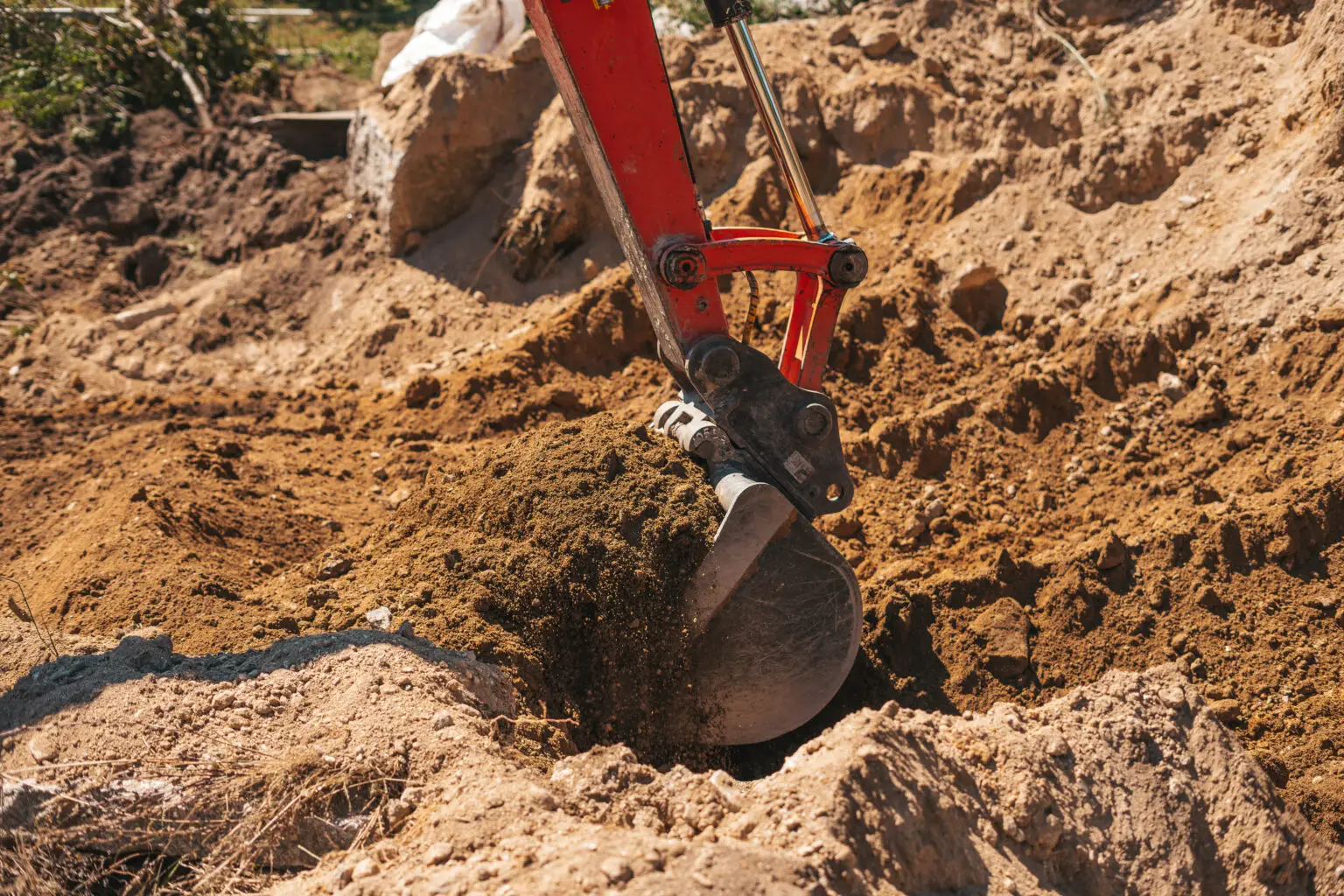
Before a house pad is poured, before a pond holds water, before a drainage system moves a single drop — the ground has to be excavated correctly. Excavation is the process of removing, moving, and shaping soil and earth to prepare a site for construction, utilities, drainage infrastructure, or other land improvements. In practice, it includes four overlapping categories of work: site excavation (bulk earthmoving for pads, basements, and structures), trenching (cutting narrow, precise channels for utilities, drainage pipe, or septic lines), hydrovac excavation (using pressurized water and vacuum suction to expose utilities without mechanical damage), and site grading (shaping and leveling the finished earth so water drains properly and structures sit on a stable, correctly sloped surface).
Working in Navarro, Henderson, and Freestone Counties means working with Blackland Prairie clay — one of the most reactive soil types in Texas. This soil swells significantly when wet and contracts and cracks when dry, which complicates both digging and compaction. An excavator who doesn’t account for these conditions can leave you with trenches that collapse after rain or pads that settle unevenly over time. Our operators know what this ground does and how to work with it.
From the first cut of the bucket to final grade, proper excavation sets the foundation — literally — for everything you’re building. Done right, it protects your investment for decades. Done wrong, it creates drainage problems, structural issues, and repair costs that are far more expensive than the job itself.
Our Excavation Process
Step 1 — Site Assessment and Utility Marking
We start every excavation job before a single machine arrives. We walk the property with you to confirm the scope of work, mark out areas to preserve, and identify any features — fence lines, existing utilities, drainage patterns — that affect how we approach the dig. Per Texas law, we call 811 before any excavation deeper than 16 inches to have underground utilities located and flagged. This protects your property and keeps the job on schedule — a struck gas line or cut power service can shut a project down for days.
Step 2 — Site Setup and Equipment Staging
Once utilities are cleared and the site is flagged, we bring in the right equipment for the job. For larger site excavation and bulk earthmoving, we use a full-size excavator with interchangeable buckets — a general-purpose bucket for bulk digging and a cleanup bucket for final grade work. Trenching jobs call for a trenching attachment or a dedicated chain trencher depending on depth and soil conditions. We stage spoil piles at least two feet from trench edges per OSHA excavation standards to prevent cave-in hazards and keep the work area safe throughout the project.
Step 3 — Excavation and Material Handling
The dig begins according to the plan — whether that’s opening a trench for a French drain system along a property line in Ennis, excavating a pond basin on a Henderson County ranch, or cutting a pad for a new home build near Corsicana. For hydrovac work, we use pressurized water jets to break up soil and a vacuum system to remove the slurry, which lets us expose buried utilities or dig in tight locations without the risk of mechanical damage. Suitable spoil material stays on site for backfill; material that can’t be reused — expansive Blackland clay or organically contaminated topsoil — is hauled off and disposed of properly.
Step 4 — Grading and Compaction
Once excavation reaches target depth, we shape and grade the site. For house pads and building sites, this means bringing the surface to the correct elevation and slope, then making passes with a compactor to achieve proper soil density — loose or improperly compacted fill is the number one cause of settling and foundation movement in East Texas. For drainage trenches, we verify positive slope throughout so water moves the direction it’s supposed to and doesn’t pool or back up. We don’t leave until the grade is right.
Step 5 — Site Cleanup and Final Walkthrough
When the work is complete, we clean up the site, remove any flagging, and walk the finished work with you before we load the equipment. You see exactly what was done, ask any questions, and confirm the result meets what we agreed on. We don’t disappear after the last pass of the blade. If something doesn’t look right to you, we want to know about it on-site — not after we’ve gone.
Serving Kerens, TX and the Surrounding Region
4W Land Management Services runs excavation projects across Kerens, TX and the broader three-county area — from Kerens, Corsicana, Mildred, Rice, Dawson, Streetman, Blooming Grove, Powell, Barry, Ennis, Athens, Kemp, Fairfield, Teague, and Palestine. Navarro County’s Blackland Prairie clay, the post oak and cedar terrain near Kerens, and the rolling acreage across Henderson and Freestone Counties each present different conditions, and our crews know what to expect before they arrive.
Payton and Catie Wilson founded 4W in Kerens because landowners in this part of Texas deserve a crew that tells the truth. Learn more about our family and how we operate — and see all of our land management services for a complete picture of what we offer.
Why Corsicana Landowners Choose 4W Land Management
4W Land Management Services was started by Payton and Catie Wilson — a family that’s spent their lives working close to the land across East Texas. They built this business on one principle: be straight with the people you work for. When you call for a free estimate, you get a real number — not a lowball bid designed to inflate once work starts. When we say we’ll show up, we do. You can learn more about our team and how we work on our About page.
We carry full liability insurance and operate within OSHA excavation and trenching standards on every job, including the Texas Railroad Commission’s 811 call-before-you-dig requirement. We also reference current Texas soil and excavation guidelines when approaching sites on Blackland Prairie clay — because that soil behaves differently than what you’ll find in most of the country, and it requires different technique. We work alongside other trades and general contractors without creating scheduling problems, and we sequence our work to keep your project moving.
We also offer special discounts for military veterans, active-duty military personnel, and first responders — a small way of showing appreciation for the people who serve.
Related Services
Excavation work often connects directly to other site improvements. Once the ground is shaped, you may need help with house pad construction to prepare a level, compacted building base, or pond builds to turn excavated low areas into functional water features. If your project involves managing how water moves across the finished site, we also handle property drainage — French drains, culvert systems, and yard drainage solutions that keep water away from structures and low spots. We handle all of it, which means fewer contractors to coordinate.
Frequently Asked Questions
Do I need a permit to excavate on my property in Texas?
For most residential and rural land excavation in Navarro, Henderson, and Freestone Counties, a permit is not required for standard site work on private property. However, if your project disturbs more than one acre of land, the Texas Commission on Environmental Quality (TCEQ) may require a Construction General Permit (CGP) for stormwater management. Projects near waterways or in flood-plain areas may have additional requirements. We recommend confirming with your county before beginning any large-scale excavation, and we’re happy to help you think through what your project requires.
Do you call 811 before you dig?
Yes — every time, on every job. Texas law requires calling 811 before excavating deeper than 16 inches so that underground utilities can be located and marked. This protects gas lines, water mains, fiber, and electrical infrastructure buried on or near your property. We contact Texas 811 as a standard step before any dig, and we follow the Texas Railroad Commission’s Pipeline Damage Prevention Program guidelines on every project.
What’s the difference between site excavation and site grading?
Site excavation is the act of removing and moving soil — digging down, opening trenches, cutting a pond basin, or clearing earth for a building foundation. Site grading is what happens after: shaping the resulting surface to a specific elevation, slope, and profile so that structures sit correctly and water drains away from them. Most projects involve both. We do the excavation, then grade the finished surface to the spec your builder or engineer needs.
How do Navarro County’s clay soils affect excavation work?
Navarro County sits in the Texas Blackland Prairie — a zone of high-clay, high-shrink-swell soil locally called “black gumbo.” When this soil is wet, it becomes sticky and unstable, making trench walls more likely to slough. When it’s dry, it hardens significantly and can be difficult to cut cleanly. It also expands and contracts with moisture changes, which means improperly compacted backfill can shift over time. Our operators account for soil conditions when choosing equipment, setting trench slopes, and specifying compaction method — especially on house pad and foundation prep work.
How much does excavation cost in Kerens, TX?
Excavation pricing in the Kerens, TX area depends on the type of work, volume of material, site access, soil conditions, and whether excavated material needs to be hauled off-site. Simple utility trenching runs differently than full site excavation for a house pad or pond basin. Hydrovac work on congested utility areas carries its own rate. We give free on-site estimates — a specific number after we walk the site, not a ballpark from a national average. Call (903) 467-5353 to schedule yours.